
Vancouver Market - Tracking commercial real estate investment sales across Metro Vancouver — sale prices, cap rates, and $/SF data for apartment, retail, office, land, and development transactions. By David Taylor, SVP at Colliers International Canada.
  • Home
  • Listings & Sales
  • About
  • Subscribe
  • Metro Vancouver Commercial Real Estate Market Data
Vancouver Market - Tracking commercial real estate investment sales across Metro Vancouver — sale prices, cap rates, and $/SF data for apartment, retail, office, land, and development transactions. By David Taylor, SVP at Colliers International Canada.
Home
Listings & Sales
About
Subscribe
Metro Vancouver Commercial Real Estate Market Data
  • Home
  • Listings & Sales
  • About
  • Subscribe
  • Metro Vancouver Commercial Real Estate Market Data
Apartment, Development, Market Research

An Idea for Housing Affordability (…Yes, It Involves Density)

There are many significant challenges facing housing affordability in the City of Vancouver. Two of the primary challenges are directly linked to the private market’s inability to build new rental housing. The lack of land available for new rental construction, and the difficulties achieving density sufficient to warrant its construction on most sites are constantly cited by the development community as barriers to new supply.

The City’s existing policies that have sought to incentivize new rental construction include Rental 100. While Rental 100 and its predecessor STIR have been successful in generating almost 4,000 unit approvals (only a few hundred have been built so far), the policy is not without controversy given that it allows what would otherwise be considered spot rezonings were they market condo projects. The City’s recent decision to set limits on rents for new rental projects as a means of promoting “affordability” will only impede the viability of those projects seeking approval under Rental 100.

What about the existing apartment zones?

65% of the City of Vancouver’s land base is dedicated to the lowest form of housing density: single family housing. The remaining 35% is divided among an ever-shrinking base of commercial, industrial, institutional and multi-family. Apartment vacancy rates have hovered below 1% for most of the last decade. In a market where homeownership is increasingly out of reach, it’s time to focus on building more rental where it is already approved, where services and amenities already exist, and most importantly, where renters want to be…RM zones.

With almost 3,000 apartment properties in the City of Vancouver, the vast majority are 3 or 4-storey walkups that were built in the 1950’s and 1960’s. Back then, the City Vancouver’s population was only climbing above 300,000 for the first time and relatively speaking, opportunities to buy land and build an apartment building were relatively plentiful.

Today, these apartments and the zoning that was put in place to permit them, are no longer responsive to the challenges facing today’s housing market.

Let’s focus on specific zones for a moment. The various multi-family zoning types that are scattered throughout the City are tailored primarily toward fairly low density walkup apartment properties. These zones include RM-3, RM-3A, RM-4, RM-4N. These zones generally allow for 1.45 FSR density, basically double that of single family, or about half that of a typical condo development. While these zones and the attendant setbacks, heights and parking were appropriate when they were built, are they appropriate in 2015?

So where are these zones located? They are primarily in established apartment areas such as Kitsilano, Kerrisdale, Marpole, Fairview, Mount Pleasant and Grandview Woodlands. For the purposes of this analysis we have intentionally excluded the already dense West End which is primarily higher density RM-5 zoning.

The City of Vancouver has been loathe to tinker existing apartment zones for many years, particularly as a result of a worrisome trend to convert rental apartments to condos in the 1990’s and early 2000’s, a trend which effectively ceased following the City’s indefinite moratorium on condo conversions for any property containing six units or more (the “rate of change” policy). Certainly these efforts to protect the existing rental stock have protected thousands of tenants that are currently paying far below market rents in central locations.

Currently, City of Vancouver policies prevent building owners or developers from tearing down or doing widespread renovations to existing apartment stock. Condo conversions are understandably deemed to run contrary to the City’s efforts on housing affordability, and so-called “renovictions” are highly publicized in the media as flaunting with tenants’ basic rights.

What is lost in the conversation however, is that the vast majority of buildings in these zones are very old, inefficient lowrise, low-density apartment buildings that no longer meet the needs of the current population.

Some facts regarding the RM-3, RM-3A, RM-4 & RM-4N zones:

  • Total number of Apartment Properties*:          2,011
  • Total land occupied:                                            22,684,219 SF, or 521 acres
 *RM-3 and RM-4 zones only, assessed value >$1M

According to CMHC’s 2014 rental market report, there are currently 35,113 private rental apartment units (excluding condos) that are located outside of the Downtown and West End. In a City starved of land and choking on housing affordability, it still shocks me that there are more single family lots (47,000) then there are apartments.

Many of these apartments have been owned for many decades by owners that are unwilling to sell due to capital gains. Likewise they have typically not spent money to upgrade or improve their buildings due to the inability (in most cases) to raise rents substantially to justify the capital cost.

The building forms of the mid-twentieth century are not always relevant any longer. In many cases these buildings have generous setbacks, no balconies, more than one parking stall per unit.

Potential Solution? Densify Existing Rental Apartment Zones For Rental Only

A cursory analysis of the above-mentioned RM-3 and RM-4 zones suggests that with even a moderate density increase to 2.25 FSR (or a 4-5 storey building form), would yield the following:

>18,147,000 SF of new density, or about 24,000 rental apartment units (six times more than what the City has generated since 2008 through STIR and Rental 100)

> If only 1% of the apartment stock (20 buildings) file applications per year, that is 240 units per year of additional rental housing, or an increase in the stock of about 1%

Rm-3 RM-4

Implementation of such a drastic planning policy would obviously create a number of potential issues. Some other thoughts for consideration:

> Protection of existing tenants: The only way densification can work is if existing renters and apartment neighbourhoods support the policies that will be required to facilitate it. Existing tenants in affected buildings could be offered unchanged rents in the new or renovated buildings with an option for a buy-out to be offered if the tenant moves on. This could be regulated by the City.

> Rent Maximums: Ensure that only new tenants can be charged market rents, existing tenants that wish to stay are allowed to do so at their previous rent level. In many cases, the additional density will more than offset these rents.

> Continue to Prohibit Mixed Condo/Rental: As was learned by STIR (which allowed rental as a public incentive), mixing market condos and rentals creates many challenges

> Temporary Capital Gains Waiver: one of the largest impediments to any apartment building owner in selling their buildings is their capital gains exposure. If the Federal Government is serious about assisting Vancouver’s worsening housing affordability problems, why not provide this kind of incentive to apartment owners by relaxing capital gains if a building owner increases their rental density? Will some wealthy landlords benefit? Of course. But the real benefactor will be the tenants of the City of Vancouver with an increased supply where it is needed. in the absence of direct federal tax credits or direct investment from senior levels of government, opportunities for new rental will continue to decline.

Without sufficient incentives or areas to build, new rental apartment construction will continue to be a challenge and invariably housing affordability will suffer. The above is only for discussion purposes and is not presented to be the solution, but hopefully a piece of the conversation…

June 11, 2015by david.taylor@colliers.com
Apartment, Development

Larco Seeks Approval to Build First Phase of Arbutus Village

Larco has applied to the City of Vancouver for permission to develop the first phase of Arbutus Village. The plan calls for development of the Northeast corner (“Block A”) of the 7-acre site with one mixed-use building comprising office space, a below-grade self-storage facility, a grocery store, and residential rental apartments. The proposal includes the following:

    • a mixed-use building comprising office space and a grocery store on the ground floor, and seven floors with 215 apartments units above;
    • total floor area of 395,000 SF (including 120,000 SF below-grade self-storage facility and a 54,000 SF new Safeway grocery store);
    • four levels of underground parking (374 spaces) and self-storage facility, accessed off of a proposed Yew Street extension.
    • First step will be demolition of the Northeast portion of the existing mall, followed by new internal streets and eventual relocation of Safeway

The rezoning for the site was approved back in July 2011, but no further development approval activity has taken place since. The whole plan calls for 508 residential units. The development application effectively quiets any previous rumours that the site may have been for sale.

The Development Permit Board meeting is scheduled for this application on September 8, 2015. Subsequent phases of the project will require additional development permits.

Arbutus Village Arbutus Village_1


May 28, 2015by david.taylor@colliers.com
Apartment, Development, Market Research

Market Spotlight: Vancouver Housing Stats

The City of Vancouver will present their third annual Housing and Homelessness Strategy Report Card to council next week. The purpose of the annual report is to track progress of the City’s various initiatives under the Housing and Homelessness Strategy 2012-2021.

The report is an excellent source of some key housing indicators compiled from CMHC and REBGV, of which several are summarized here:

  • the City of Vancouver had 4,648 dwellings commence construction in 2014 (approximately 25% single family and 75% multi-family units). This rate is close to the 5-year annual average of 4,824.
  • Vacancy rates continued to decrease between 2013 and 2014, both in the city of
    Vancouver (from 1.0% to 0.5%) and regionally (from 1.7% to 1.0%) reflecting
    ongoing population growth and demand for housing
  • Between March 2014 and March 2015, the benchmark  price for a single family
    house increased by 14% on the eastside and 12% on the westside, while the
    benchmark price for condos fell by 1% on the eastside and increased by 5% on
    the westside.
  • 409 units of interim supportive housing were created in 2014 (395 Kingsway, 3475 E. Hastings, 1335 Howe and 1060 Howe)
  • 439 units of permanent supportive housing were created (1134 Burrard, 111 Princess, 2465 Fraser and 951 Boundary)
  • 3,783 secured market rental units have been approved during 2012-2014 (only 407 were actually completed in 2014)

CofV_Housing report_1 CofV_Housing report_2 CofV_Housing report_3

CofV_Housing report_4

May 22, 2015by david.taylor@colliers.com
Apartment, Development, Office, Retail

Market Recap: Rezoning of Two Major Downtown Sites

As was reported in the media late last week, two major rezoning inquiries are going before the City of Vancouver’s Standing Committee on City Finance and Services on Wednesday; one was expected and one was a bit of a surprise within the industry. The inquiry stage simply confirms Council’s approval to proceed to a formal rezoning application stage.

Sinclair Centre

  • 1.54 acre site
  • Proposal to increase the density and height for commercial uses
  • 1,100,000 SF of office space for Federal Gov’t (up from existing 390,000 SF)
  • A density of 17.0 – 20.0 FSR
  • Max height of 350 ft due to view cones (29 storeys)
  • Existing CD-1 zoning proposed to be amended

Sinclair Centre

Excerpt from the Policy Report explaining the heritage aspect:

The Sinclair Centre is comprised of four heritage buildings all listed on the City’s Heritage
Register:
  • the former Main Post Office (built in 1910) — Municipally Designated and Federally Recognized Heritage Building, listed as an ‘A’
  • the R.V. Winch Building (built in 1911) — Municipally Designated and Federally Recognized Heritage Building , listed as an ‘A
  • the Customs Examining Warehouse (built in 1913) — Vancouver Heritage Register, listed as an ‘A,’ and Federally Recognized Heritage Building , listed as an ‘A,
  • the Federal Building/Post Office Extension (built in 1936) — listed as a ‘B’ (but not designated).
  • In 1986 the four buildings were restored by the Federal Government. While the buildings were seismically upgraded, they would not meet today’s standards and some portions of the buildings received very modest upgrades

Post Office Site

  • 2.98 acre site acquired by bcIMC in 2013 for $159 Million
  • Rezoning to allow reuse and retention of the existing building, with new residential and commercial uses
  • Existing Post Office building would contain retail, office, hotel, residential lobbies
    and the blank granite walls would be modified to provide for pedestrian-oriented at-grade retail
  • New building above would contain office, hotel, and rental/condo housing
  • View cones limit building heights between 225 feet and 285 feet

349 W GeorgiaComment from the Policy Report on the heritage aspect:

Since 1958, the building was the City’s Central Post Office. Recently, the Post Office has relocated to a site near the airport. The building has heritage merit. It was identified in the “ Recent Landmarks–Post 40’s Inventory,” which was conducted in the early 90’s, as a Class ‘B’. Designed by a prominent architectural firm McCarter Nairne and Partners Architects, the design of the building subscribes to the general principles of the International Style of Modernism.
May 11, 2015by david.taylor@colliers.com
Apartment, Development

Rental Apartment Building Planned for South Vancouver

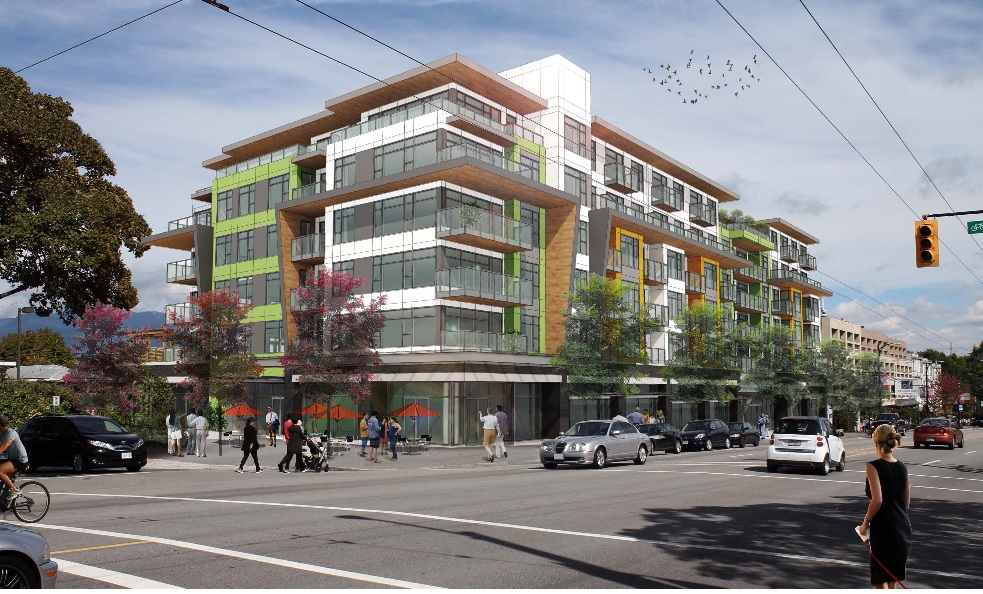
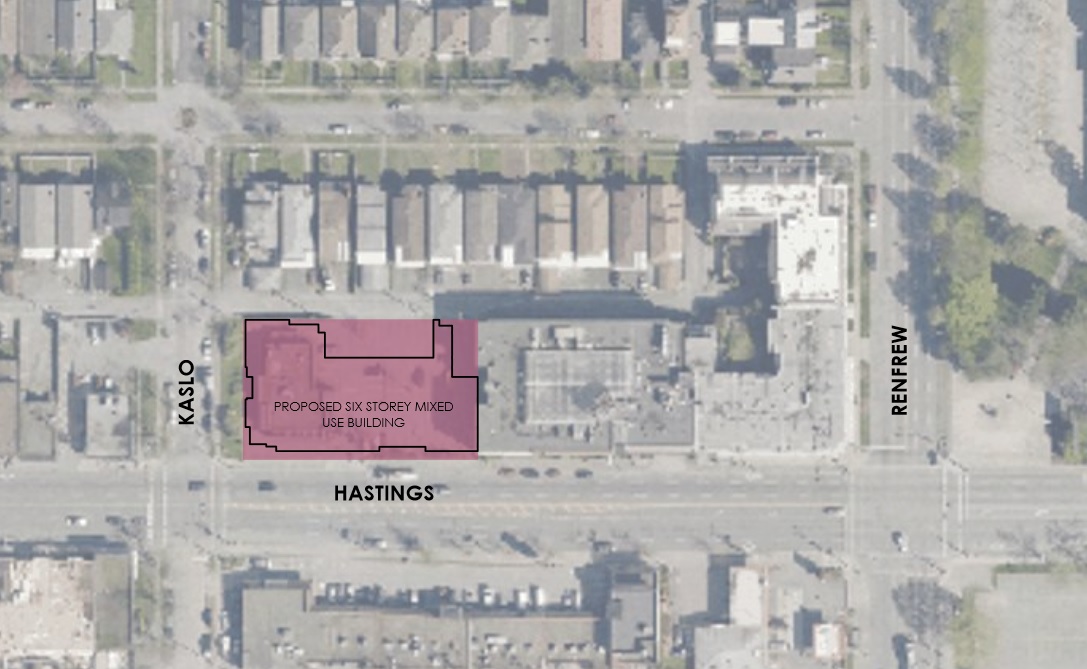
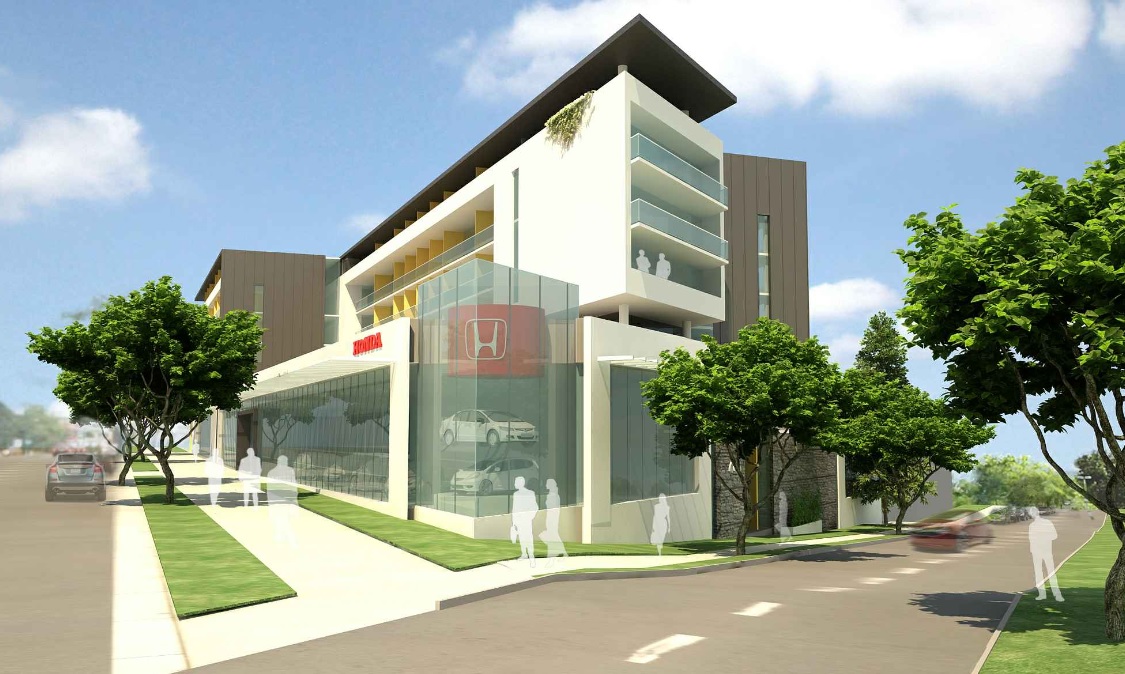
A rezoning application has been filed for a 12,500 SF C-1 zoned site at East 64th Avenue and Fraser Street for a 5-storey market rental building. The proposed rezoning would see the current C-1 zone go to CD-1 under the Rental 100 Secured Market Rental Housing Policy. The proposal is for a 5-storey mixed-use building that includes:

    • 37 secured market rental units;
    • commercial space at grade
    • a building height of 52 ft. ;
    • a density of 2.65 FSR; and
    • 28 underground parking spaces.

8209 Fraser 8209 Fraser_2

The site sits just one block from the Super 8 Motel, which is in preliminary planning for a rezoning and redevelopment, including multi-family housing.

May 5, 2015by david.taylor@colliers.com
Page 87 of 110« First...102030«86878889»90100110...Last »

Search the Site

Vancouver Market Follow

David Taylor - Senior Vice President @ColliersCanada. Chronicling investment and development activity in Vancouver. Views are my own.

vancouvermrkt
Retweet on Twitter Vancouver Market Retweeted
globeandmail The Globe and Mail @globeandmail ·
16 Apr

First Capital REIT acquired by Choice Properties and KingSett for $5.2-billion

Reply on Twitter 2044762643806949766 Retweet on Twitter 2044762643806949766 3 Like on Twitter 2044762643806949766 4 X 2044762643806949766
Retweet on Twitter Vancouver Market Retweeted
gravitasmsn MN @gravitasmsn ·
16 Apr

First Capital REIT --> Choice Properties REIT and Kingsett Capital are teaming up to acquire the Canadian real estate company in a deal valued at over $9 billion, including assumed debt. Choice Properties will acquire roughly five billion dollars worth of shopping centres, while

Reply on Twitter 2044768222269063276 Retweet on Twitter 2044768222269063276 1 Like on Twitter 2044768222269063276 1 X 2044768222269063276
Retweet on Twitter Vancouver Market Retweeted
northshorenews North Shore News @northshorenews ·
16 Apr

West Vancouver condo project in receivership, causing 'heartbreak' in Dundarave

Reply on Twitter 2044620858858274895 Retweet on Twitter 2044620858858274895 6 Like on Twitter 2044620858858274895 14 X 2044620858858274895
vancouvermrkt Vancouver Market @vancouvermrkt ·
9 Apr

Greater Vancouver commercial real estate transactions down 8.3% in 2025 via @westerninvestor

Reply on Twitter 2042378406193738120 Retweet on Twitter 2042378406193738120 Like on Twitter 2042378406193738120 1 X 2042378406193738120
Load More

Categories

  • Apartment
  • Condo
  • Development
  • For Sale
  • Hotel
  • Investment
  • Land
  • Market Research
  • Office
  • Rental
  • Retail
  • SOLD


David Taylor Personal Real Estate Corporation

Colliers International

DT

David Taylor

Senior Vice President, Colliers Canada

David Taylor is a Senior Vice President at Colliers International in Vancouver, BC, specializing in the sale of commercial real estate across Metro Vancouver. He has sold over $1.7 Billion in office buildings, retail properties, apartment buildings and development land since 2004.

Vancouver Market chronicles investment and development activity in Metro Vancouver, including sale prices, cap rates, $/SF metrics, and market context for commercial real estate transactions.

© 2019 Copyright  |  All Rights Reserved