After initially launching the planning process for the Grandview Woodlands neighbourhood of East Vancouver in March 2012, the City of Vancouver has released what is expected to be the final draft of the plan that will go to Council for approval in the next few weeks.
The initial draft concept plan caused widespread opposition and resulted in the City pulling back by forming a Citizens’ Assembly and subsequently a two year process of community engagement.
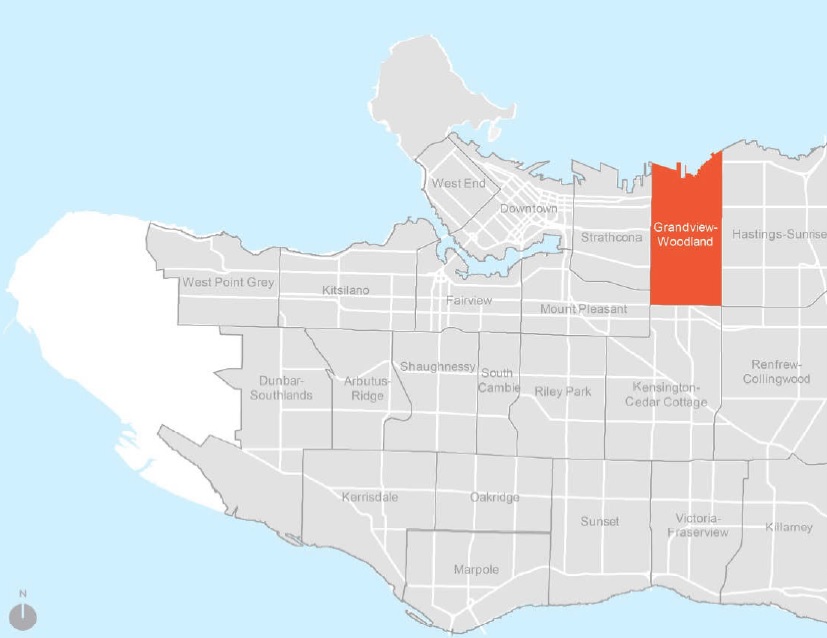
The resulting draft plan, which was released this weekend, contains few surprises, but generally lays out how the area is likely to be developed in the coming years in an area forecast to grow to 43,500 people by 2041.
Here is a sub-area breakdown for those unfamiliar:
“The Drive”
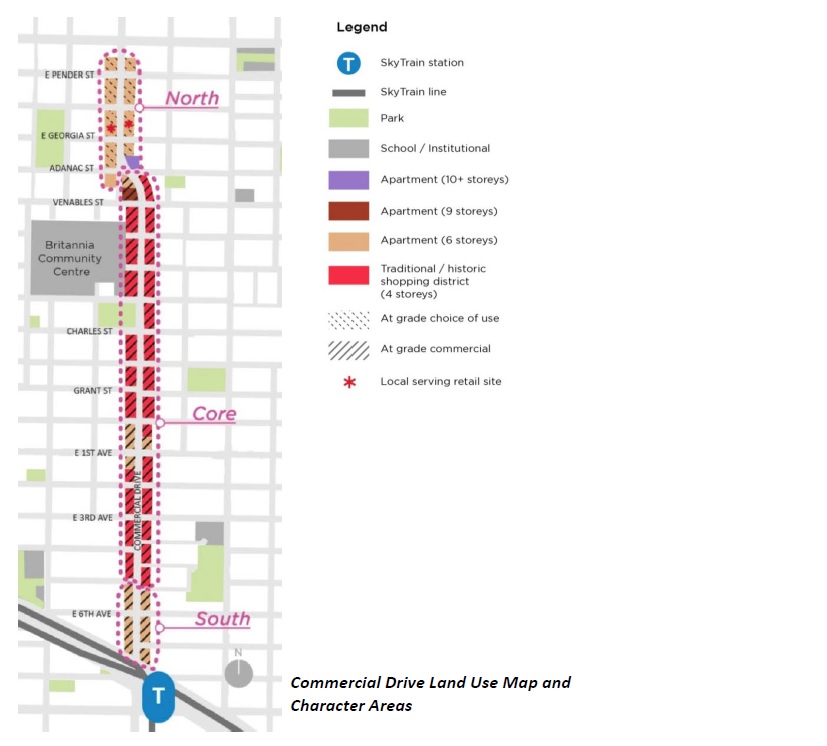 1. Retain the existing mixed‐use zoning (4-storeys or less) throughout the core blocks of Commercial Drive.
2. Maintain the pattern of smaller, individual retail frontages to help keep The Drive eclectic and active.
3. Outside of core and only on larger sites at the East 1st Avenue node, allow buildings up to 6-storeys/3.0 FSR to provide new housing.
Grandview
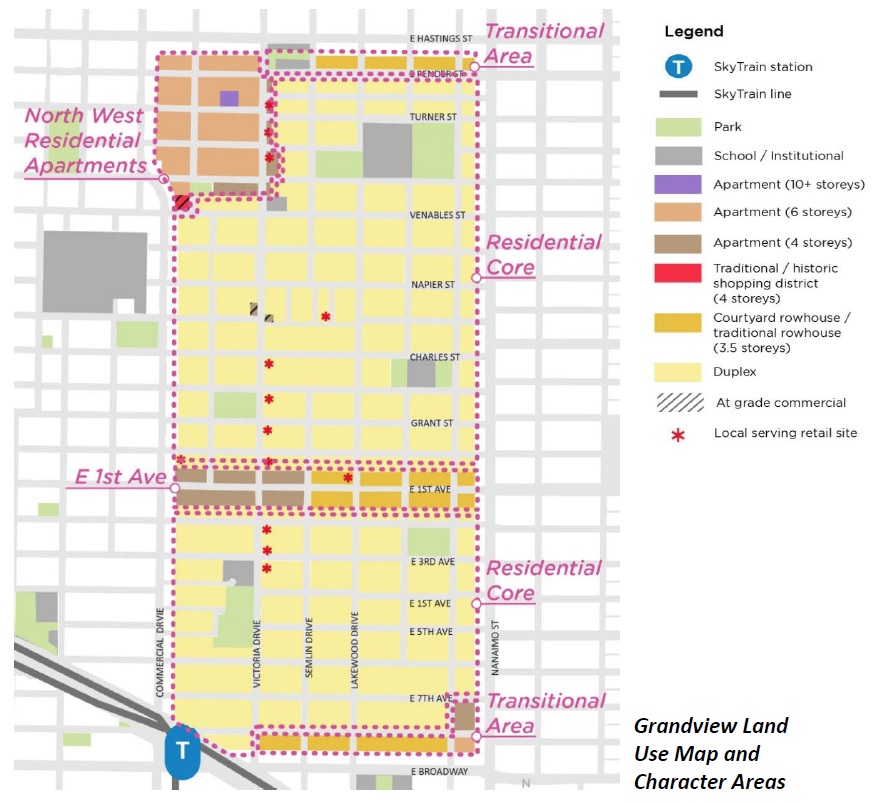
1. Modify regulations to discourage demolition of pre‐1940 houses.
2. Expand the duplex areas and revise regulations to encourage new infill housing.
3. Preserve the small‐scale local serving shops.
4. On arterial streets and in transition areas near transit routes on Hastings and on Broadway, allow a mix of four‐ storey apartments and rowhouses for families.
5. In the apartment district at the north end, allow buildings up to 6‐storeys / 2.4 FSR to provide renewed and additional secured rental housing while protecting character streetscapes.
Hastings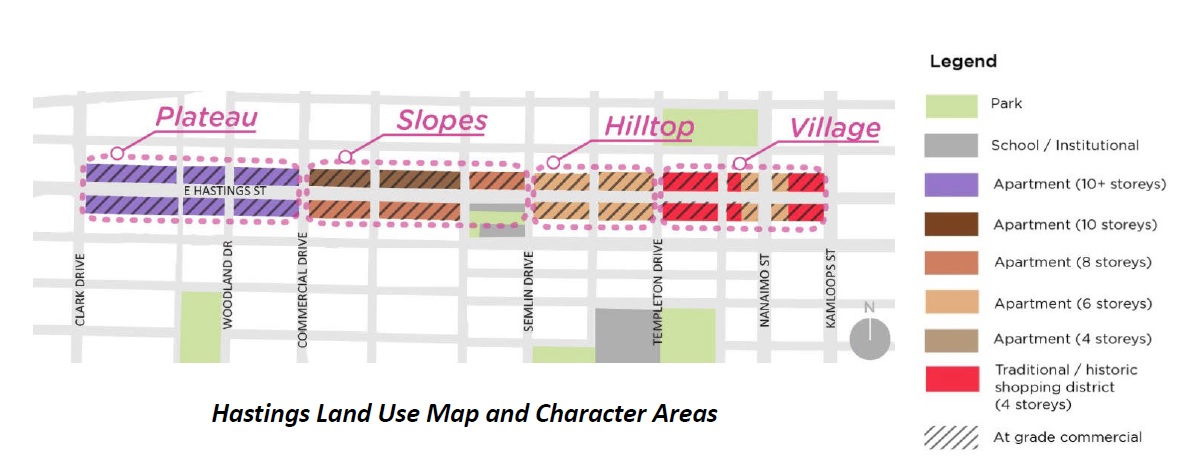
1. Create a new gateway area near Clark Drive that incorporates renewed cultural, social and heritage assets, along with non‐market and other housing, with the tallest buildings at 18‐storeys. Range of densities highest at 4.0 to 5.6 FSR.
2. Improve pedestrian comfort along Hastings Street with public plazas that will activate and unify the street.
3. Support renewal and expansion of key social facilities such as those provided by the Urban Native Youth Association and the Vancouver Aboriginal Friendship Centre.
4. Step buildings down to heights in the 8‐ to 10‐storey range (3.0 – 4.0 FSR) as one goes eastward up the hill towards Victoria Drive and provide new rental and ownership housing.
5. Retain the existing mixed‐use zoning (4-storeys or less) in the Hastings Village shopping area near Nanaimo Street.
6. Allow for 100% secured market rental housing in buildings up to 6-storeys in the central portions of Hastings Street.
Cedar Cove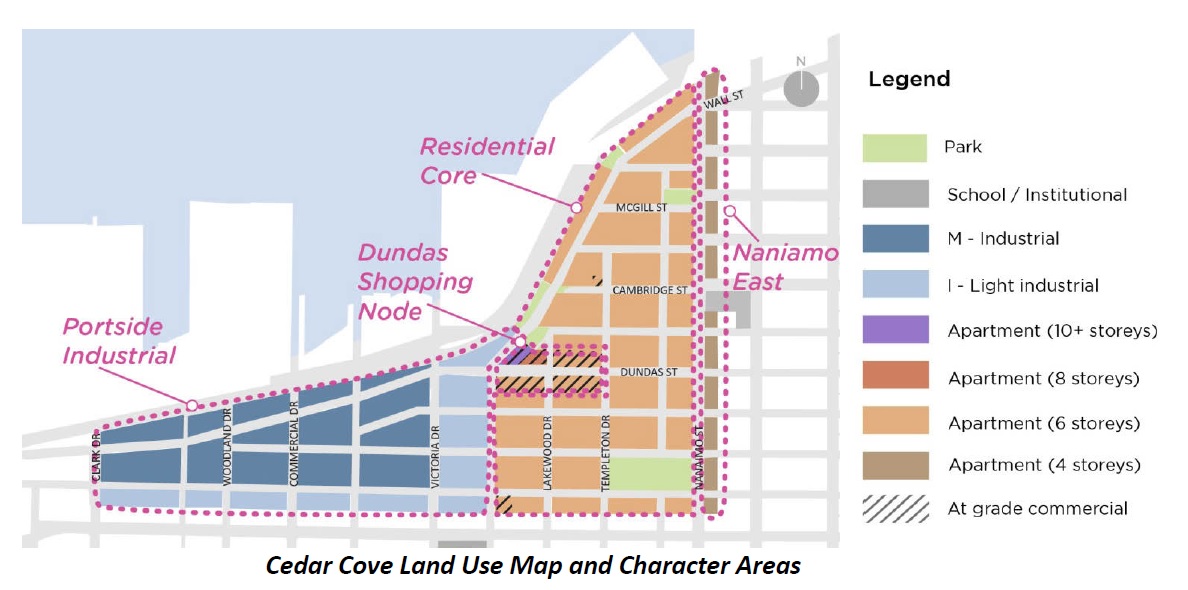
1. Maintain the existing protected rental housing stock while allowing for managed rental replacement and new supply in buildings up to 6-storeys (2.4 FSR) in the area west of Nanaimo Street and up to 4-storeys on the eastside of Nanaimo Street.
2. Expand the neighbourhood shopping node at Dundas and Wall to allow for more services closer to home.
3. Preserve the significant character streetscapes that have been identified.
4. To the north of the shopping node, encourage expansion of Oxford Park by allowing for mixed‐use buildings in the 8 to 12-storey range (3.2 FSR).
5. Protect the city’s industrial and port‐related jobs while improving the interface with residential areas.
Britannia Woodland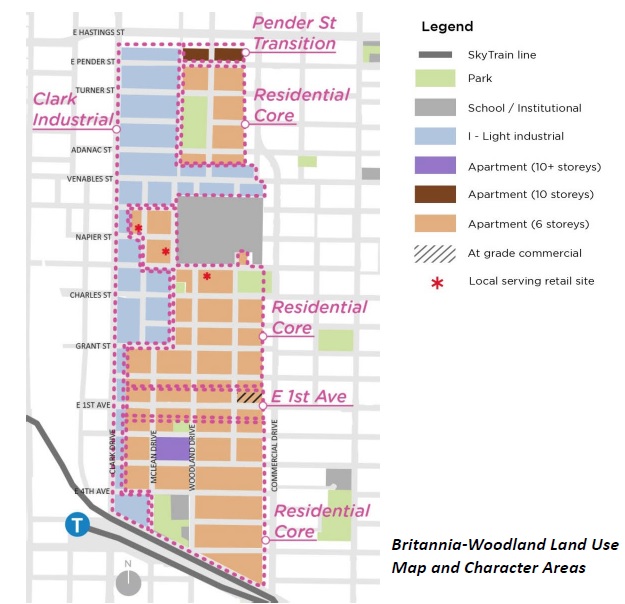
1. Maintain the existing protected rental housing stock while allowing for managed rental replacement and new supply in buildings up to 6-storeys / 2.4 FSR.
2. Preserve significant character streetscapes that have been identified and allow infill housing to encourage retention of older buildings.
3. On selected blocks on Pender Street, adjacent to the new gateway neighbourhood along Hastings Street, allow buildings up to 10-storeys / 3.2 FSR to achieve new non‐market and other housing.
4. Retain space for local jobs and improve the interface between industrial and residential uses.
Nanaimo
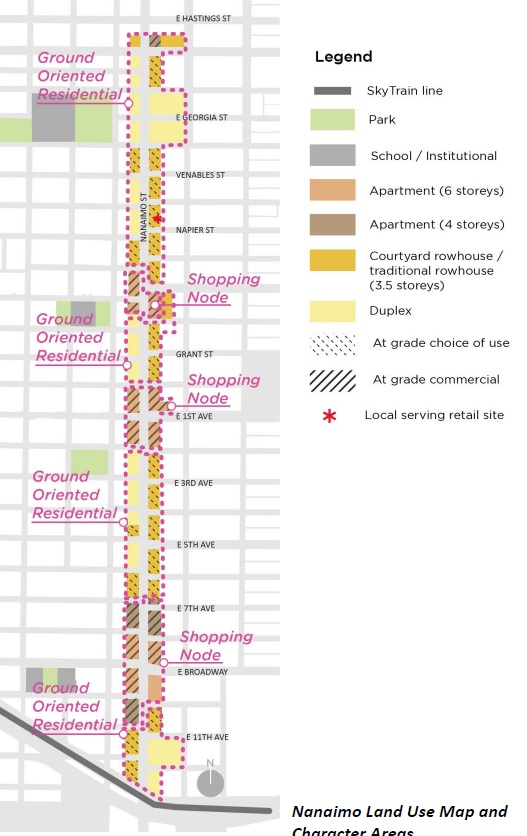
1. Allow ground‐oriented housing, such as rowhouses suitable for families, along much of Nanaimo Street.
2. At commercial shopping nodes, allow mixed‐use buildings of between 4 and 6-storeys (2.0 – 3.0 FSR) to help bring new life to the local shopping nodes.
3. Improve pedestrian comfort in the public realm to activate and unify the street.
Commercial‐Broadway Station Precinct
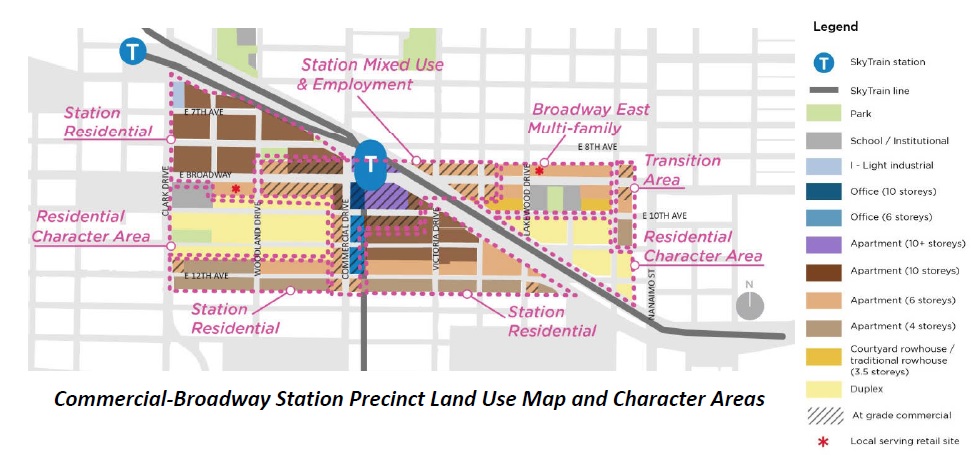 1. Create a new social heart for the community with a new civic plaza as part of a renewed Safeway site with ground‐floor commercial uses and new housing in buildings ranging from 12‐ to 24‐storeys (up to 5.7 FSR).
2. Near the station, allow mixed‐use and mixed‐tenure buildings ranging from 6 to 10-storeys.
3. In the Station Precinct residential areas, maintain the existing protected rental housing stock while allowing for managed rental replacement and new supply in 4 to 6‐storey buildings and 10‐storey buildings (4.0 FSR) on larger sites, provided that all new units are secured as rental housing.
4. Allow 6‐storey buildings on East Broadway and rowhouses in selected areas to provide family housing close to transit.
5. In the low‐scale, traditional character area located west and south of the transit station, allow duplex and two‐family dwellings with a focus on infill housing to retain character buildings.
6. Create new office space close to the rapid transit station.
How quickly the Grandview Woodlands plan area develops will be partially dependent upon market conditions but will also be shaped by the way in which the City of Vancouver will allow development to proceed per the Plan.
As was the case with both the Marpole Community Plan and the West End Community Plan, the Grandview Woodlands Community Plan divides the plan area into different sub-areas; effectively rezoning many areas and leaving others to be rezoned by proponents in the future. This ensures that larger scale projects will go through a typical rezoning process and smaller duplex and rowhouse projects will simply require development permits.
The proposed two areas are broken down as follows:
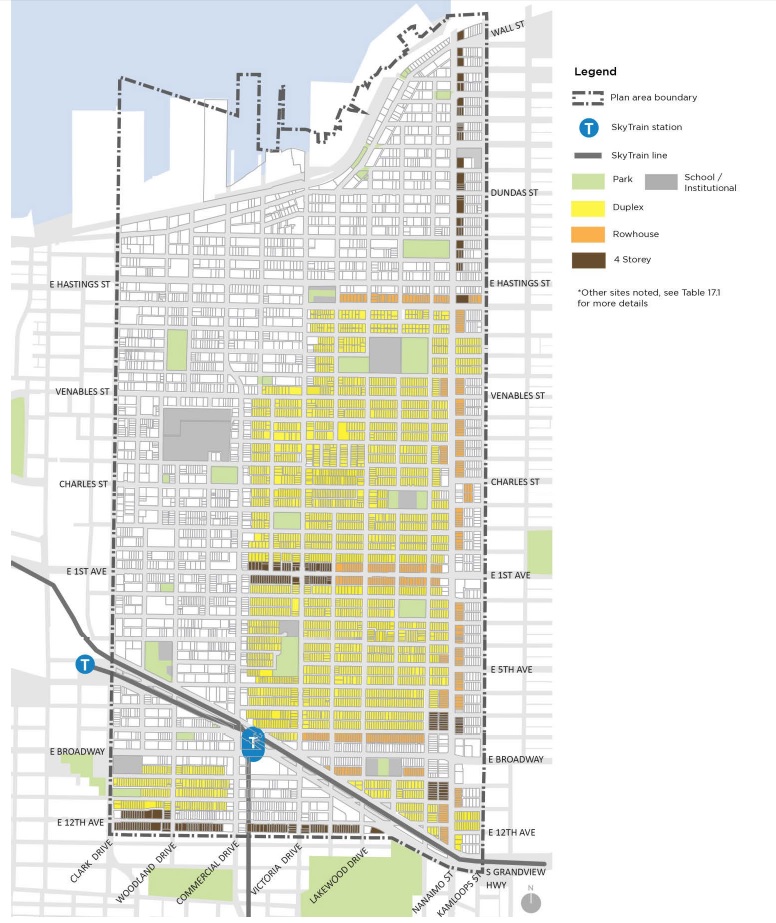
City-Initiated Rezoning Areas
These areas will be effectively “rezoned” and therefore will not require a lengthy application process and public hearing for each development.
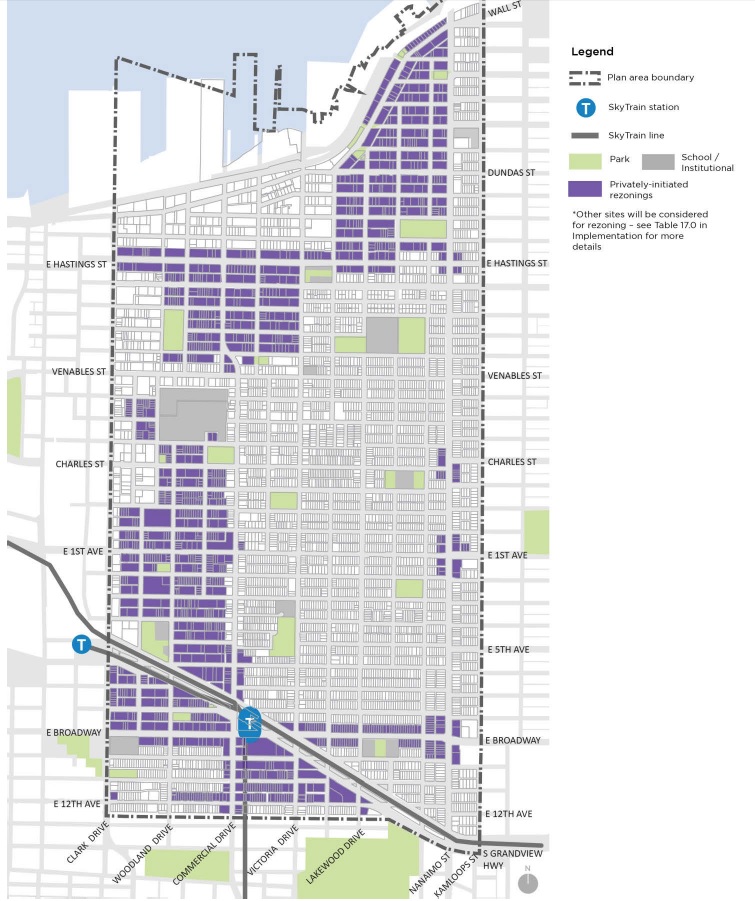
 Privately Initiated Rezoning Areas
The map below depicts areas that will require a developer or building owner to apply for a rezoning and go through a typical rezoning process.
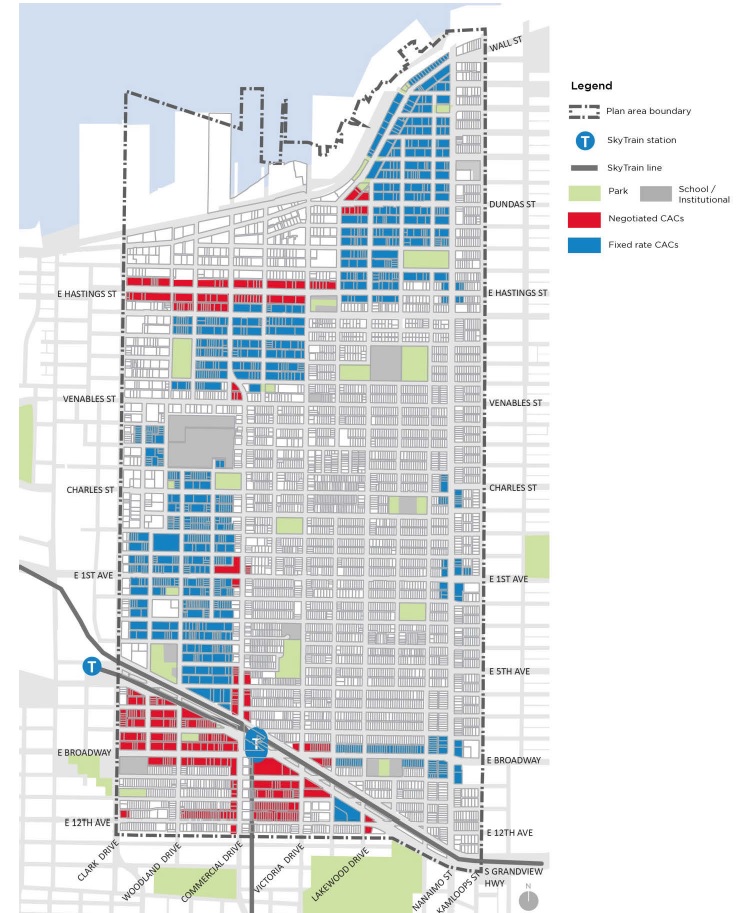
 Community Amenity Contributions (CACs)
Below is a map outlining where there will be a fixed-rate CAC target and where CACs will be negotiated on an application basis.
 A full copy of the draft Grandview Woodlands Community Plan can be downloaded at the City’s website: http://vancouver.ca/home-property-development/grandview-woodland-community-plan.aspx


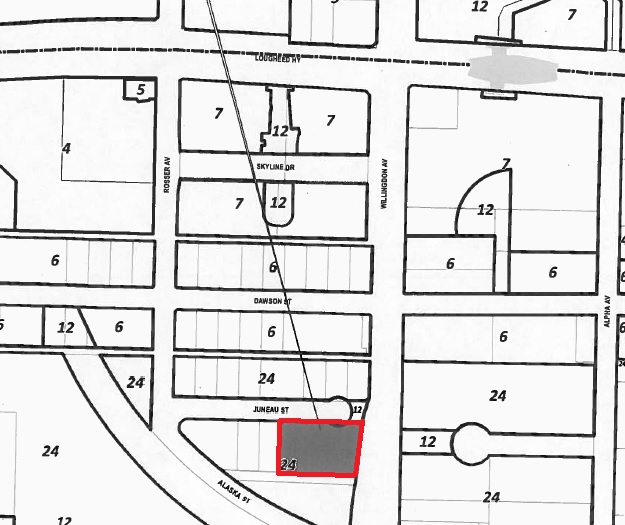 Solterra owns this three-lot assembly of older M1 zoned industrial buildings along Willingdon Avenue at Juneau Street in the Brentwood area. The plan for the site is a 25-storey tower with townhouses under the RM-4s designation. There is a 23-storey tower just across Juneau Street at second reading.
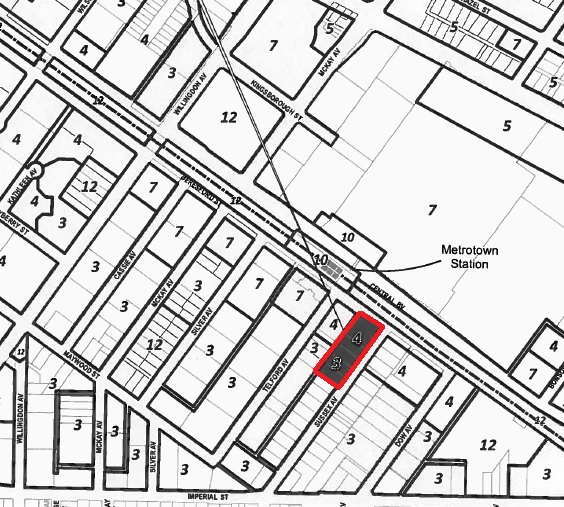 The plan for this 57,116 SF Metrotown site at Sussex and Beresford is for a mixed-use high-rise and low-rise market residential apartment building including retail and office uses. The project will also include a separate non-market housing building developed in conjunction with B.C. Housing. The proposed density is 5.0 FAR per the RM-5s and C2 guidelines. The site was acquired by Thind Properties in May 2016 for $32,680,000.
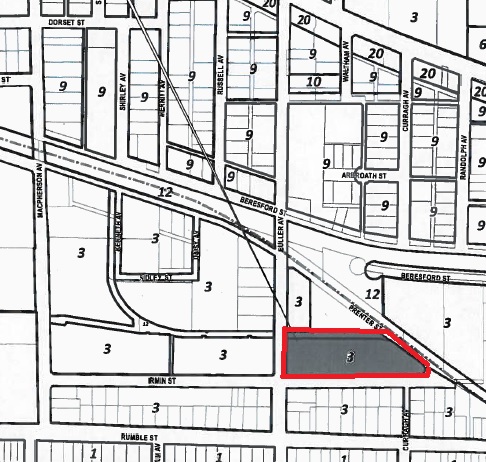 This 132,000 SF site is currently occupied by a multi-tenant warehouse building and is located next to a section of former rail line in the Royal Oak area. The site is designated for medium-density residential development, and the application is for a mix of stacked-townhouses and traditional townhomes with full underground parking to a density of 1.1 FAR.
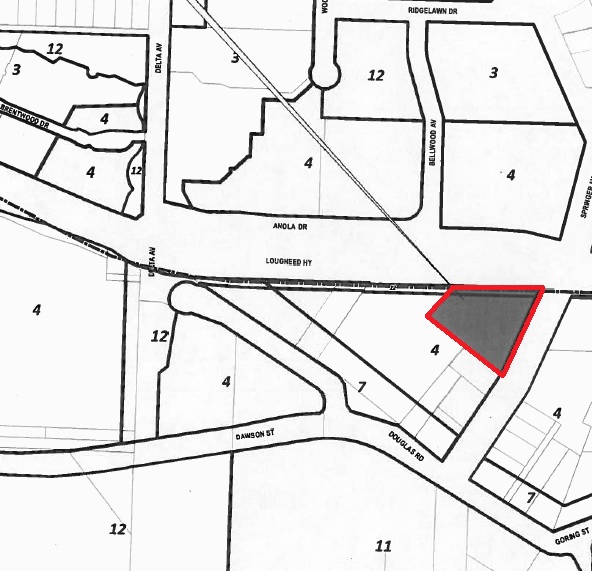 Another highrise condo tower is being planned for the Brentwood area; this one at the corner of Lougheed Highway and Springer Street. The 51,204 SF site is currently occupied by two older industrial buildings owned by Beedie Living. The plan calls for a 269,000 SF tower with 250 to 300 residential units. The concept includes “breaks” throughout the building to add visual interest to the massing and scale of the tower.